Introduction
Physics students and science enthusiasts will discover how Paul Dirac’s quiet brilliance fundamentally changed our understanding of the quantum world. This article explores Dirac’s revolutionary equation that predicted antimatter, his uniquely mathematical approach to physics, and the personal story behind one of science’s most [tooltip word=”intriguing”] figures.
Early Life and Academic Journey
Childhood and family influences
Paul Dirac wasn’t exactly born with a silver spoon in his mouth. Coming into the world on August 8, 1902, in Bristol, England, his early life was shaped by his strict father, Charles, a Swiss-French immigrant who taught French at a local school.
Ever had that teacher who was way too intense? That was Charles Dirac at home. He forced young Paul to speak only French during meals – mess up a word, and you’d be sent from the table hungry. Talk about family dinner pressure!
Paul’s mother, Florence, was far gentler but couldn’t shield him from his father’s rigid discipline. This stifling home environment made Paul incredibly reserved – a trait that would become legendary in scientific circles later on.
His older brother, Felix, and younger sister, Betty, completed the family unit, but Paul often retreated into solitude, finding comfort in mathematics rather than playground games.
Education at Bristol and Cambridge
Paul’s brain was wired differently from the start. At Merchant Venturers’ School in Bristol, his mathematical talent stood out like a sore thumb. While other kids struggled with basic calculations, Paul was already exploring advanced concepts that made his teachers’ heads spin.
In 1918, he enrolled at the University of Bristol, initially studying electrical engineering. But let’s be real – his heart wasn’t in circuit boards and power systems. Mathematics was his true love, and he eventually completed a degree in mathematics in 1921 with first-class honors.
Cambridge came calling next. At St. John’s College, Dirac dived headfirst into research under Ralph Fowler, one of Britain’s leading mathematical physicists. Talk about a perfect match. This environment let Dirac’s genius truly bloom.
Mathematical prowess and academic achievements
Here’s the thing about Dirac – he didn’t just solve problems, he revolutionized how we approach them. By 1926, at just 24 years old, he had already developed his own version of quantum mechanics using abstract mathematical structures that most physicists couldn’t wrap their heads around.
His Ph.D. thesis? A masterpiece that introduced what we now call “Dirac notation” – a mathematical language that physicists still use today. It’s like he invented a new alphabet that made complex quantum equations suddenly readable.
The speed at which he churned out groundbreaking papers was mind-boggling. Between 1925 and 1933, Dirac published works that would have taken most brilliant scientists an entire lifetime to produce.
Meeting Niels Bohr and entering quantum physics
1925 changed everything. Dirac met Niels Bohr, the Danish physics rockstar who was reshaping our understanding of atoms. Their first meeting wasn’t exactly a bromance – Dirac was painfully shy, and Bohr was known for never shutting up.
But something clicked intellectually. Bohr’s ideas about quantum behavior sparked something in Dirac’s mathematical mind. After visiting Bohr’s institute in Copenhagen, Dirac returned to Cambridge with a new mission: to build a mathematical framework for this weird quantum world.
Within months, he created his own formulation of quantum mechanics and soon after developed the relativistic equation for the electron that bears his name. The Dirac equation didn’t just solve a physics problem – it predicted the existence of antimatter years before it was discovered in a lab.
Quantum physics had found its mathematical poet, even if he barely spoke above a whisper.
The Revolutionary Dirac Equation
A. Mathematical formulation and breakthrough moment
Ever wonder what happens when genius meets persistence? That’s exactly what played out in 1928 when Paul Dirac, frustrated with existing quantum theories, locked himself away with just paper, pencil and determination.
The problem was maddening – how to describe electrons in a way that worked with both quantum mechanics and Einstein’s special relativity. Previous attempts by Schrödinger and others couldn’t handle particles moving near light speed.
Dirac’s approach? Pure mathematical beauty. He constructed what we now call the Dirac equation:
$(i\hbar\gamma^\mu\partial_\mu – mc)\psi = 0$
This seemingly simple formula was revolutionary. While other physicists were struggling with complex visualizations, Dirac just followed where the math led him. The equation emerged from his insistence that quantum mechanics respect relativity’s principles.
The breakthrough hit when Dirac realized his equation needed four-component wave functions instead of the usual two. This wasn’t just mathematical convenience – it was revealing something profound about reality itself.
B. Predicting antimatter before its discovery
Dirac’s equation had a weird “problem” – it predicted negative energy states for electrons. Most physicists would’ve dismissed this as a mathematical artifact. Not Dirac.
Instead of ignoring the strange solutions, he embraced them. What if these weren’t errors but predictions? Dirac proposed something that sounded like science fiction: for every particle, there exists an antiparticle with identical mass but opposite charge.
This wasn’t just a wild guess. It fell directly out of his equations.
The physics community initially balked. An entirely new class of matter, just because some equation suggested it? Seemed far-fetched.
Then in 1932, Carl Anderson discovered the positron – the antimatter counterpart to the electron – while studying cosmic rays. Dirac’s prediction was confirmed, transforming a mathematical curiosity into physical reality.
C. Unifying quantum mechanics and special relativity
The beauty of Dirac’s equation wasn’t just in predicting new particles. It solved a fundamental physics problem that had stumped everyone else.
Before Dirac, we had two powerful theories that didn’t play nice together. Quantum mechanics worked brilliantly for tiny particles moving slowly. Special relativity perfectly described anything moving near light speed. But combine them? Mathematical disaster.
Dirac’s equation bridged this gap elegantly. It properly accounted for relativistic effects while preserving quantum behavior. It showed that electron spin – a purely quantum property – naturally emerges when you make quantum mechanics compatible with relativity.
This unification wasn’t just theoretical satisfaction. It enabled accurate predictions about high-energy physics phenomena that would’ve been impossible otherwise.
D. Impact on modern physics understanding
Dirac’s equation didn’t just solve yesterday’s problems – it became the foundation for today’s physics.
Quantum field theory? Built on Dirac’s framework. The Standard Model that describes fundamental particles? Relies on Dirac-type equations. Modern particle accelerators? They’re essentially testing grounds for predictions derived from Dirac’s approach.
But perhaps the most profound impact is philosophical. Dirac showed that mathematical beauty could reveal nature’s secrets before experiments confirm them. When asked about his methods, he famously said: “I found that mathematical beauty is a very helpful guide. It is a fact of experience that it works.”
This approach – following elegant mathematics to physical truth – has guided theoretical physics ever since.
E. Nobel Prize recognition
Dirac shared the 1933 Nobel Prize in Physics with Erwin Schrödinger “for the discovery of new productive forms of atomic theory.”
At just 31, he was among the youngest theoretical physicists ever to receive this honor. The Nobel committee specifically cited his reconciliation of quantum mechanics with relativity and his prediction of antimatter.
True to character, Dirac’s acceptance speech was brief and technical. While others might have basked in the spotlight, he simply explained his equation and its implications, then quietly returned to work.
What makes this recognition remarkable is its timing. The Nobel committee awarded the prize for antimatter prediction even though experimental confirmation was still fresh. They recognized the equation’s mathematical elegance and predictive power represented a fundamental advance in understanding reality.
Dirac’s Unique Approach to Physics
Conceptual clarity and mathematical beauty
Dirac wasn’t like other physicists. While many scrambled to explain experimental results, he pursued physics through pure mathematical reasoning. His approach? Startlingly simple: seek mathematical beauty first, physical meaning second.
When Dirac worked on quantum mechanics, he didn’t get bogged down in physical interpretations. Instead, he looked for elegant equations that made sense mathematically. The famous Dirac equation didn’t come from trying to solve a specific problem – it emerged from his search for a relativistic version of Schrödinger’s equation that maintained mathematical harmony.
“A physical law must possess mathematical beauty,” he once said. And he meant it.
Preference for elegance over experimental verification
Dirac took a gamble most physicists wouldn’t dare – sometimes prioritizing mathematical elegance over experimental data.
When his equation predicted the existence of antimatter, many physicists thought he’d gone too far. There was zero experimental evidence for such particles. But Dirac stuck to his guns, convinced the mathematical beauty of his equation couldn’t lead him astray.
Four years later, the positron was discovered, proving him right.
This wasn’t luck. This was Dirac’s method working exactly as he believed it would.
The principle of mathematical beauty in scientific theories
What did Dirac mean by “mathematical beauty” anyway? For him, beauty meant simplicity combined with power. An equation with few terms that explained many phenomena was beautiful. An equation that unified seemingly unrelated concepts was beautiful.
“God used beautiful mathematics in creating the world,” Dirac claimed.
This philosophy guided his work throughout his career. He believed the fundamental laws of nature must be mathematically beautiful, and any ugly theory was probably wrong.
Many physicists now follow this approach – string theory, supersymmetry, and other cutting-edge theories are pursued largely because of their mathematical elegance, even when experimental evidence is lacking.
Dirac’s legacy isn’t just his equations – it’s this radical approach to doing physics.
Beyond the Equation: Dirac’s Other Contributions
Quantum Field Theory Foundations
Dirac wasn’t just the equation guy. While everyone was still wrapping their heads around his relativistic electron equation, he’d already moved on to bigger things.
In 1927, Dirac basically invented quantum field theory. No big deal, right? Wrong. This was HUGE.
He figured out how to apply quantum mechanics to electromagnetic fields, creating a framework that treated particles as excited states of an underlying field. It sounds obvious now, but back then? Mind-blowing stuff.
What made Dirac’s approach special was its mathematical elegance. He didn’t just patch together ideas – he built a coherent theory that explained how particles could be created and destroyed. The theory gave us the concept of “second quantization” which is now standard physics vocabulary.
Magnetic Monopoles Prediction
In 1931, Dirac dropped another bombshell. “Hey guys, magnetic monopoles might exist,” he casually mentioned in a paper.
Magnets always have north and south poles. Break one in half, you get two smaller magnets, each with north and south poles. But Dirac’s math suggested something wild – particles with just one magnetic pole could theoretically exist.
The crazy part? His prediction came straight from pure mathematics. Dirac showed that if even a single magnetic monopole exists anywhere in the universe, it would explain why electric charge is quantized (comes in discrete packets).
Physicists are still hunting for these elusive particles today, almost a century later.
Large Number Hypothesis
Dirac had this weird habit of noticing numerical coincidences that nobody else did. In the 1930s, he observed that certain ratios of physical constants were suspiciously close to the age of the universe.
For instance, the ratio of electromagnetic to gravitational forces between an electron and proton is roughly 10^40. And guess what? The age of the universe in atomic time units is also about 10^40.
Coincidence? Dirac didn’t think so. He proposed these numbers must be related, suggesting fundamental constants might actually change over cosmic time scales.
Most physicists dismissed this idea initially. But aspects of Dirac’s hypothesis have influenced modern theories about varying fundamental constants.
Quantum Electrodynamics Development
Before QED became the crown jewel of physics, Dirac laid its foundation. His 1927 paper on quantum theory of radiation was the first attempt to describe how light and matter interact according to quantum principles.
Sure, the theory had problems. Calculations gave infinite answers (yikes), and Dirac knew it. But he established the conceptual framework that Feynman, Schwinger, and Tomonaga would later refine into modern QED.
What’s remarkable is how Dirac anticipated renormalization – the mathematical technique that eventually solved those infinity problems. He didn’t complete the solution, but he pointed the way forward.
When QED finally emerged as a complete theory in the late 1940s, it confirmed many of Dirac’s early insights. The man saw decades ahead of his contemporaries.
The Man Behind the Science
A. Famous introversion and taciturn nature
Dirac wasn’t just quiet – he redefined the concept. The man who revolutionized physics barely spoke unless absolutely necessary. His colleagues nicknamed him “The Silent One,” and for good reason.
At scientific conferences, Dirac would sit silently through heated debates, then deliver a single, devastatingly precise comment that solved everything. When asked why he spoke so little, he reportedly answered, “Because people ask me questions.”
His introversion wasn’t an act. It was his natural state. Fellow physicist Niels Bohr once joked that Dirac had discovered “the quantum theory of conversation” – the minimum amount of words needed to communicate.
B. Marriage to Margit Wigner and family life
In 1937, Dirac surprised everyone by marrying Margit Wigner, sister of physicist Eugene Wigner. Those who knew his extreme shyness couldn’t imagine him in a relationship. Yet their marriage lasted until his death in 1984.
Margit, nicknamed “Manci,” brought warmth and social connection to Dirac’s life. She handled the practical aspects of daily living that Dirac found baffling. The couple raised Margit’s two children from a previous marriage and had two daughters together.
At home, Dirac remained Dirac. He’d often retreat to his study for hours, emerging with elegant equations rather than conversation. Yet family members recall moments of unexpected tenderness – Dirac teaching his daughters mathematics through improvised games.
C. Teaching style and mentorship approach
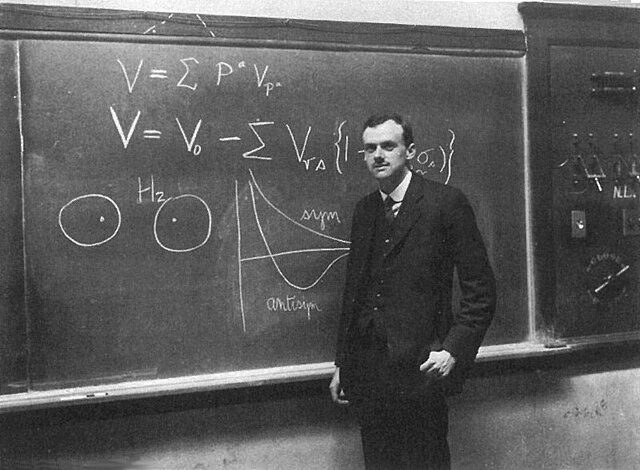
Dirac’s lectures were unlike any others. He’d walk in, immediately start writing equations on the board, and speak in perfectly constructed sentences with minimal explanation. No jokes, no small talk, no wasted words.
Students described sitting in stunned silence, frantically copying equations they couldn’t yet understand. One famous story tells of a student raising his hand to say, “I don’t understand the equation on the board.” After a long pause, Dirac replied, “That is a statement, not a question,” and continued writing.
Yet those who persisted found Dirac surprisingly accessible in one-on-one settings. Though not effusive with praise, he gave precise, thoughtful feedback that cut straight to the heart of problems.
D. Colleagues’ perspectives and anecdotes
Einstein called Dirac “the strangest man.” Bohr found him frustrating yet brilliant. Oppenheimer said Dirac possessed “the purest soul in physics.”
At Princeton’s Institute for Advanced Study, a famous anecdote captures Dirac perfectly. During a gathering, someone mentioned a new novel. “Have you read it?” they asked Dirac. “No,” he replied. “I only read science fiction.” After a pause, he added, “And Agatha Christie.”
Colleagues learned to appreciate his brutal honesty. When shown a colleague’s paper, Dirac reportedly said, “This isn’t right. It isn’t even wrong.” The phrase became famous among physicists.
Despite his intimidating brilliance, those who knew Dirac well found kindness beneath the silence – a man who simply saw the world differently, expressing through equations what others couldn’t express with a thousand words.
Dirac’s Legacy in Modern Physics
A. Influence on subsequent generations of physicists
Dirac’s fingerprints are all over modern physics. His equation didn’t just solve a problem – it rewrote the rulebook. Richard Feynman, who never handed out compliments easily, called Dirac’s work “the most beautiful theory in physics.”
Ever notice how physicists today talk about symmetry like it’s their religion? Thank Dirac for that obsession. He showed that mathematical beauty isn’t just nice to look at – it’s often the signpost pointing toward truth.
Nobel Prize winner Steven Weinberg once said, “Dirac has been the great example of just how far pure thought can go in physics.” That’s not hyperbole. Generations of theoretical physicists still ask themselves: “What would Dirac do?” when facing seemingly impossible problems.
B. Applications in modern technology and computing
That smartphone in your pocket? Dirac’s equations helped make it possible. Semiconductor physics relies on understanding electron behavior – precisely what Dirac mapped out.
Quantum computing, the tech everyone’s betting will change everything, builds directly on Dirac’s mathematical framework. Those qubits that promise to revolutionize computing? They’re just following Dirac’s mathematical playbook.
MRI machines in hospitals worldwide? They work because Dirac correctly predicted electron spin. That’s not abstract theory – that’s saving lives daily.
C. Continued relevance in quantum field theories
Modern physics hasn’t outgrown Dirac – it’s still catching up. The Standard Model of particle physics, our current best description of reality, has Dirac’s DNA all through it.
His relativistic quantum field theory approach didn’t just solve yesterday’s problems. It created the foundation for how we tackle today’s biggest questions in physics – from black hole information paradoxes to the mysteries of dark matter.
Quantum electrodynamics, considered the most precisely tested theory in science, stands on Dirac’s shoulders. When physicists calculate results that match experiments to ten decimal places, they’re using Dirac’s mathematical framework.
D. The Dirac medal and other commemorations
The Dirac Medal isn’t just another academic trophy. Since 1985, it’s been physics’ version of the Nobel – often recognizing work too cutting-edge for Stockholm’s more conservative tastes.
Walk through Westminster Abbey and you’ll find Dirac’s name carved alongside Newton and Darwin. For a man who barely spoke, his equations now literally speak from stone.
In Bristol and Cambridge, buildings bear his name. In Tallahassee, Florida State University houses the Dirac Science Library. Not bad for someone who reportedly once replied to a compliment with just: “Thank you.”
E. Posthumous recognition and historical perspective
History hasn’t just been kind to Dirac – it’s elevated him. As quantum physics has moved from fringe to fundamental, Dirac’s contributions shine brighter.
Graham Farmelo’s biography “The Strangest Man” introduced Dirac to a wider audience, revealing the fascinating human behind the equations. Turns out the man who predicted antimatter was just as remarkable as his discoveries.
What’s truly striking about Dirac’s legacy is how little revision it’s needed. While other theories have required constant patching, Dirac’s work arrived nearly perfect. As physicist Freeman Dyson noted, “Dirac’s work stands, like a great cathedral, isolated and timeless, probably more admired than understood.”
The Silent Genius Who Reshaped Physics
Paul Dirac’s journey from his early academic pursuits to becoming a foundational figure in quantum mechanics demonstrates how revolutionary thinking can transform science. Through his equation, which elegantly unified quantum theory with special relativity, Dirac not only predicted the existence of antimatter but established a mathematical framework that continues to guide modern physics. His unique, mathematically rigorous approach to understanding nature, coupled with contributions spanning magnetic monopoles, quantum field theory, and more, cement his place among the greatest scientific minds.
Despite his profound impact on physics, Dirac remained an enigmatic figure, known for his reticence and precision in both speech and thought. Today, his legacy lives on not just in the equations bearing his name, but in how physicists approach fundamental questions about our universe. As we continue to explore quantum mechanics and search for a unified theory, we stand on the shoulders of this quiet revolutionary whose mathematical beauty revealed nature’s deepest secrets.