
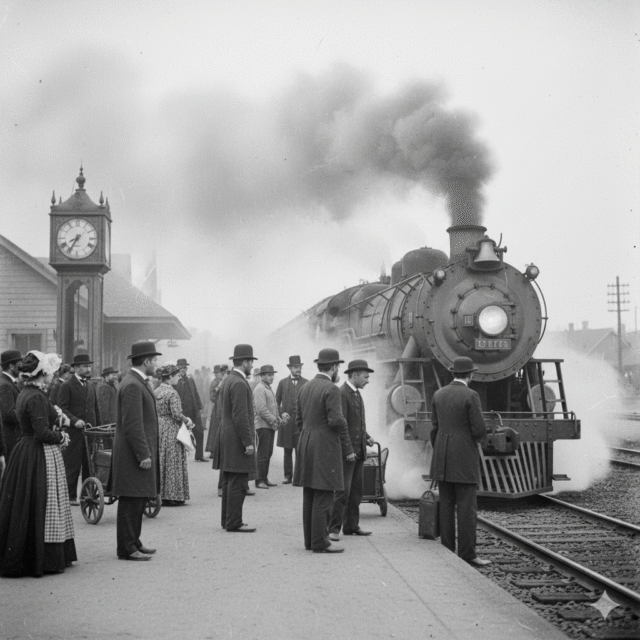
An engine with extreme capabilities and still running on the tracks with an exemplary outcomes. Steam engines were the milestone in themselves. In this blog you will find about the history, and basic aspects of its working. Steam engine is basically an engine which works on the principle of moving with the pressure of steam. This was one of the most significant inventions of its time. In fact, currently also there are some places in the world that uses them. More to discover in the blog.
Introduction: The Age of Steam
Imagine living in the 18th century. Horses pulled carts, sails carried ships, and human muscle powered nearly everything else. Then, almost overnight, a new machine began to hiss, puff, and roar across the landscape—the steam engine. It wasn’t just another invention; it was the heartbeat of the Industrial Revolution. But how did this fiery beast actually work?
A Brief History: From Curiosity to Revolution
The story begins long before locomotives. In the 1st century AD, a Greek engineer named Hero of Alexandria built a small device called an aeolipile. It spun when steam escaped from its nozzles—a toy rather than a tool. For centuries, steam was more a scientific curiosity than a source of power.
Fast-forward to the 17th and 18th centuries: coal mines in Britain filled with water, making mining dangerous. Inventors sought a machine to pump water out. Thomas Newcomen created the first practical steam engine in 1712, though it was bulky and inefficient. Then came James Watt, whose improvements in the 1760s—such as the separate condenser—turned the steam engine into a true workhorse of industry.
The Heart of the Machine: How It Works
At its core, a steam engine transforms heat energy from boiling water into mechanical motion. Here’s the journey step by step:
- Firebox and Boiler – Coal or wood is burned in the firebox, heating water in the boiler. This produces high-pressure steam.
(Image suggestion: Cross-sectional diagram of a boiler showing fire, water, and steam chamber.) - Steam Chamber – The steam flows through pipes into a cylinder.
- Piston and Cylinder – The pressurized steam pushes a piston back and forth inside a cylinder. Imagine a giant syringe being moved by invisible hands of vapor.
- Connecting Rod and Crank – The piston connects to a rod, which turns a wheel or pump. This is where straight-line motion becomes rotational power.
- Exhaust – Used steam is released through a valve, often creating the iconic puff and hiss we associate with trains.
Why It Mattered: Changing the World
The steam engine was more than a machine—it was a social and economic earthquake.
- Mines: Engines pumped water, making deep mining possible.
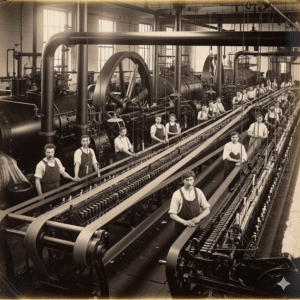
- Factories: Machines no longer depended on rivers; they could run anywhere coal could be delivered.
- Transportation: Steam locomotives and steamships shrank distances, turning days of travel into hours.
- Everyday Life: It powered printing presses, textile mills, and even the first electric generators.
Beyond the Basics: Efficiency and Ingenuity
James Watt’s genius wasn’t just in building a working engine but making it efficient. His separate condenser saved fuel by cooling steam without cooling the whole cylinder. Later designs, like compound engines, used steam more than once, squeezing out every bit of energy.
Steam Engines Today: Relics or Inspirations?
Although internal combustion engines and electricity eventually replaced steam, echoes of the steam age remain. Steam turbines still power most modern power plants—just at a far larger, more advanced scale.
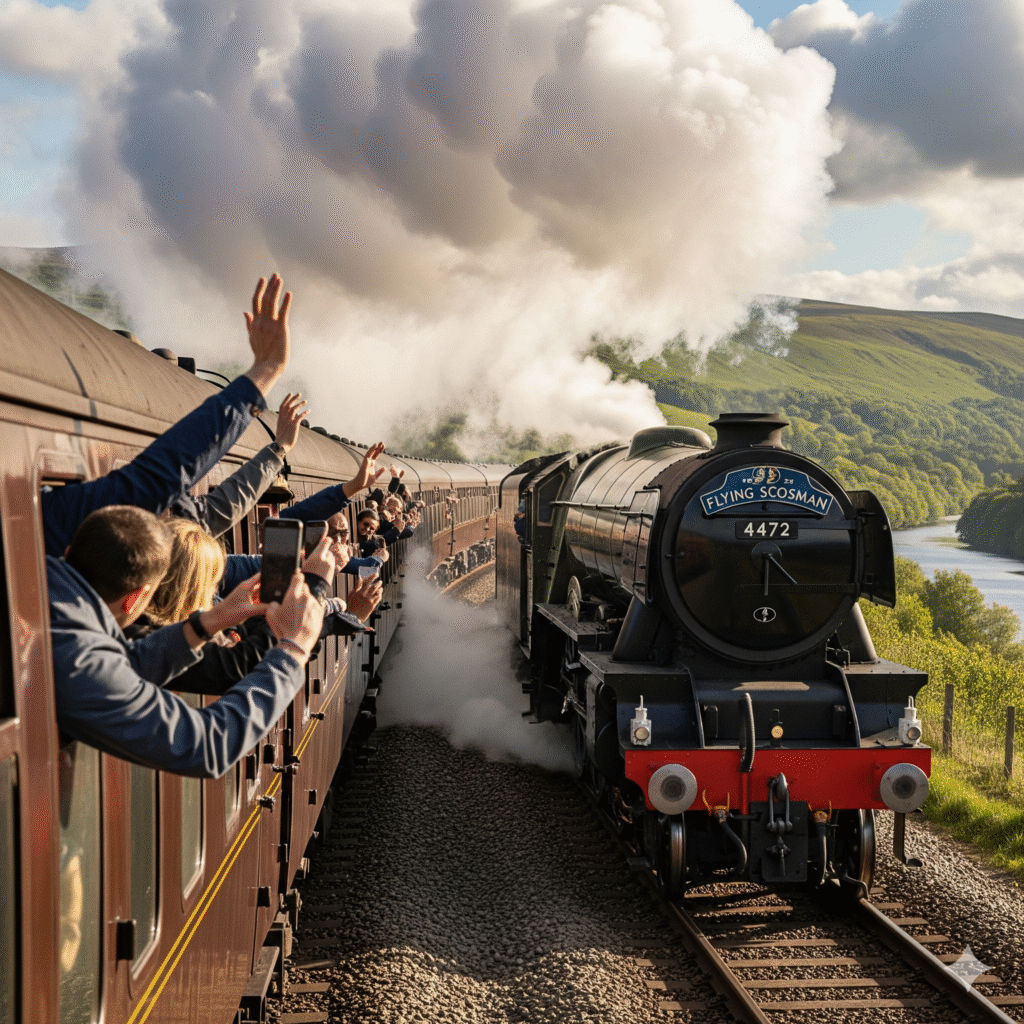
And, of course, preserved steam locomotives still thunder along tourist railways, reminding us of a time when the hiss of steam meant progress.
The steam engine is more than pipes and pistons—it’s a symbol of human curiosity. What began as Hero’s spinning toy became the backbone of factories, transport, and industry. It teaches us a timeless lesson: when imagination meets practical need, even boiling water can move the world.
📚 Sources and References
- Britannica – Steam Engine https://www.britannica.com/technology/steam-engine
- Science Museum UK – James Watt and the Steam Revolution
- National Railway Museum – The Birth of the Locomotive
- Pacey, Arnold. Technology in World Civilization (MIT Press, 1990)
- Landes, David S. The Unbound Prometheus (Cambridge University Press, 1969)